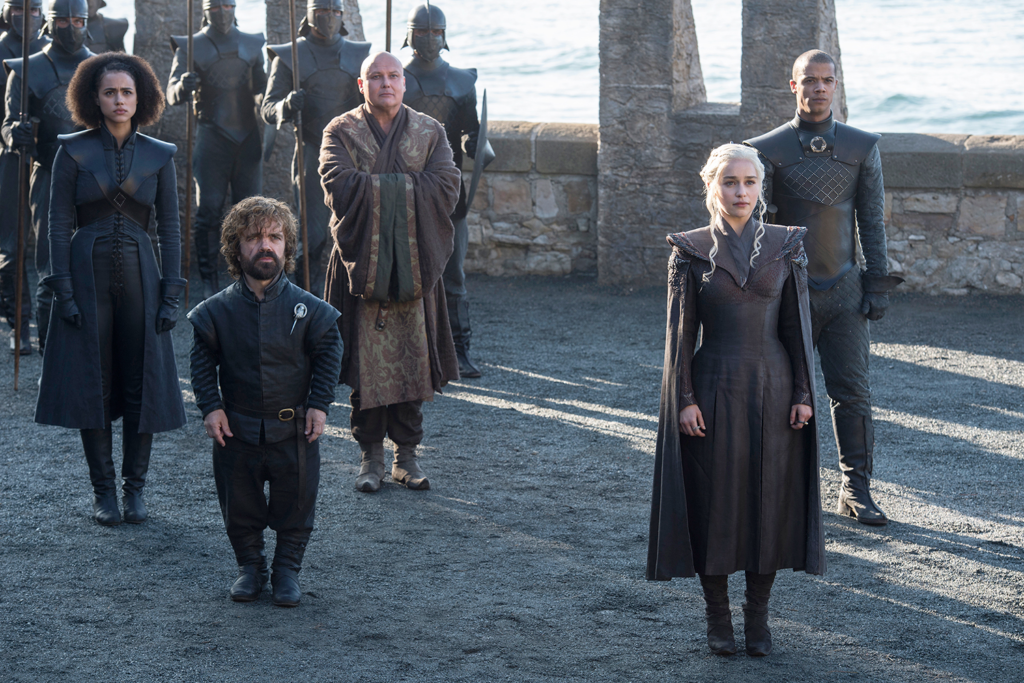
Updated January 2026: Industry signals indicate that Westeros is no longer just a TV series — it is becoming one of HBO’s long-term franchise pillars.
For years, fans believed Game of Thrones ended with its controversial finale. The Iron Throne was destroyed, the kingdoms scattered, and Westeros seemed ready to fade into television history. But behind the scenes, HBO was doing something very different — not ending Game of Thrones, but rebuilding it into a long-term universe.
Today, it’s becoming clear: Game of Thrones isn’t over. It’s evolving into HBO’s most valuable and carefully managed franchise.
From One Epic Series to a Living Universe
The original Game of Thrones was never designed as a universe. It was a singular, massive adaptation of George R.R. Martin’s novels. Yet its cultural impact — global fandom, record-breaking viewership, endless discussion — made it impossible for HBO to simply walk away.
Instead of rushing into spin-offs immediately after the finale, HBO paused. That pause was strategic.
Rather than repeating the mistakes of overexpansion, HBO began laying the groundwork for a slow, controlled transformation — one that prioritizes quality, distinct storytelling, and long-term audience trust.
House of the Dragon: Proof the Strategy Works
The first real test of this new approach was House of the Dragon. Instead of nostalgia-driven fan service, the series focused on:
- A single historical conflict
- Fewer main characters
- A tighter narrative timeline
The result?
Strong viewership, sustained discussion, and renewed confidence in Westeros as a setting that still has stories worth telling.
More importantly, House of the Dragon proved that the audience didn’t just miss Game of Thrones — they missed good storytelling inside that world.
Why HBO Is Thinking Long-Term This Time
HBO’s current expansion strategy looks very different from most franchise models.
Instead of flooding the market with simultaneous releases, HBO is:
- Spacing projects across multiple years
- Alternating between epic-scale and character-driven stories
- Treating each series as a standalone entry
This allows each show to breathe, build anticipation, and avoid fatigue — something even major franchises often struggle with.
A Universe Built on Different Tones
One of the most interesting shifts is tonal variety.
Not every Westeros story needs dragons and massive wars. Some thrive on:
- Personal journeys
- Political maneuvering
- Moral ambiguity
- Small-scale heroism
This diversity makes the universe expandable without becoming repetitive. It also allows HBO to attract different viewer segments — from hardcore fantasy fans to character-driven drama audiences.
Why Game of Thrones Fits HBO’s Identity Perfectly
HBO isn’t chasing short-term hype. Its brand is built on:
- Prestige storytelling
- Cinematic production
- Long character arcs
The Game of Thrones universe aligns naturally with this philosophy. It offers:
- Endless historical depth
- Interconnected noble houses
- Generational conflicts
- A mythology that grows richer with time
In many ways, Westeros is the perfect long-term storytelling playground for HBO.
Lessons Learned From the Original Series
HBO clearly learned from the backlash surrounding the original series’ ending.
Today’s approach shows:
- More respect for pacing
- Clear narrative endpoints
- Greater creative oversight
- Willingness to cancel ideas that don’t meet standards
This signals maturity — a franchise guided by restraint rather than desperation.
A Global Franchise Without Overexposure
Another quiet success: Game of Thrones remains globally relevant without dominating the release calendar.
By avoiding constant releases, HBO ensures:
- Each project feels like an event
- Media attention stays focused
- Fan discussion remains organic
This controlled presence keeps Westeros powerful in public imagination.
What This Means for the Future of Westeros
All signs suggest that HBO sees Westeros not as a completed chapter, but as a story engine capable of running for decades.
Future projects may explore:
- Different eras
- Lesser-known conflicts
- Houses outside the main spotlight
- Stories where dragons aren’t the centerpiece
And that’s exactly why this universe can last.
Final Thoughts: A Quiet, Confident Expansion
Unlike loud franchise announcements and rushed cinematic universes, HBO is playing the long game.
Game of Thrones isn’t ending.
It’s being reshaped into a carefully curated world, where every story has room to matter.
In an era of content overload, that patience may be HBO’s greatest strength — and Westeros’ path to becoming its biggest universe yet.